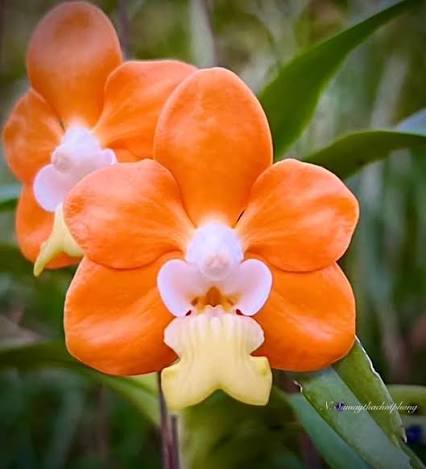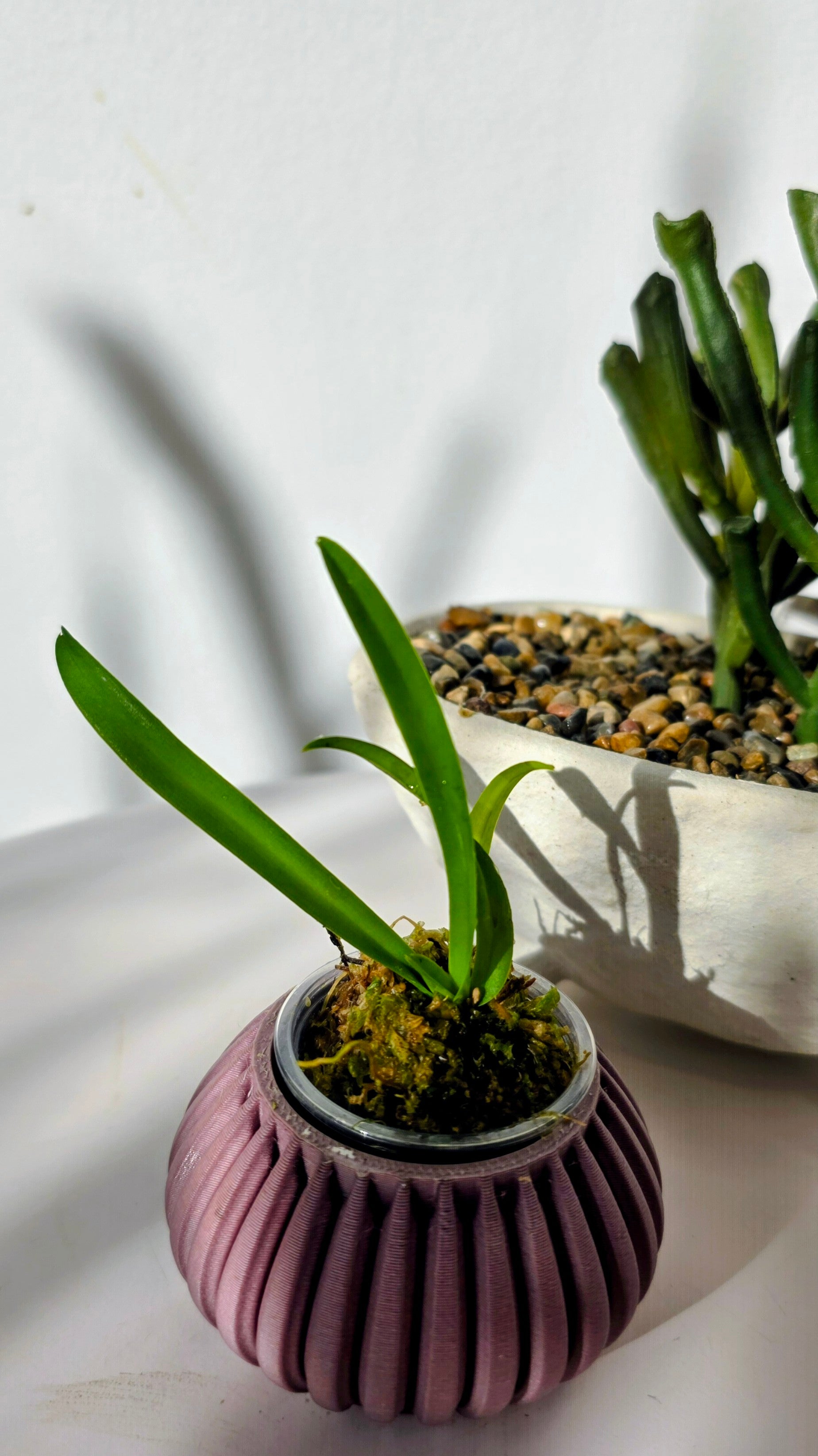



Vanda denisoniana is a monopodial epiphytic orchid native to Southeast Asia, particularly regions in China, Myanmar, Thailand, and Vietnam. It belongs to the Vanda genus, famous for its spectacular, long-lasting flowers and vertical growth habit.
Key Features:
-
Growth Habit:
-
Monopodial (grows upward from a single stem without pseudobulbs).
-
Produces aerial roots that absorb moisture and nutrients from the air.
-
Can grow quite tall if given enough support.
-
-
Leaves:
-
Thick, strap-shaped, leathery leaves arranged along the upright stem.
-
Leaves are bright green and can store water, helping the plant tolerate short dry periods.
-
-
Flowers:
-
Highly prized for beauty and fragrance.
-
Flowers are medium-sized (5–7 cm across), usually white or pale pink with reddish-purple spots or streaks, especially on the lip and petals.
-
Inflorescences are racemes that emerge from the stem, producing multiple flowers that can last 2–3 weeks.
-
-
Size:
-
Vanda denisoniana is relatively compact compared to other Vandas, making it suitable for indoor cultivation.
-
Mature plants can reach 1–2 feet in height under ideal conditions.
-
Care Guide for Vanda denisoniana
1. Light:
-
Requires bright, indirect light.
-
Can tolerate some direct morning or late afternoon sun but avoid harsh midday sun, which can burn leaves.
-
Leaves should be bright green, not dark green, indicating enough light.
2. Temperature:
-
Prefers intermediate to warm temperatures: 65–85°F (18–29°C) during the day and 55–65°F (13–18°C) at night.
-
Can tolerate slightly cooler nights but avoid frost.
3. Humidity:
-
Thrives in high humidity (60–80%).
-
Good air circulation is critical to prevent fungal or bacterial infections.
4. Watering:
-
Water frequently during active growth, especially in summer.
-
Allow roots to dry slightly between waterings; avoid letting water sit at the base.
-
Reduce watering in cooler months or during slower growth.
5. Potting / Mounting:
-
Best grown in hanging baskets or mounted on slabs, allowing roots to hang freely.
-
If potted, use coarse bark or orchid media that drains quickly.
-
Avoid compact soil; roots need air.
6. Fertilization:
-
Feed with a balanced orchid fertilizer (20-20-20 or similar), diluted to ¼–½ strength.
-
Fertilize weekly or biweekly during active growth.
-
Flush roots with plain water occasionally to prevent salt buildup.
7. Blooming Tips:
-
Requires bright light, warm temperatures, and high humidity to induce flowering.
-
Slightly cooler nights can also help trigger blooms.