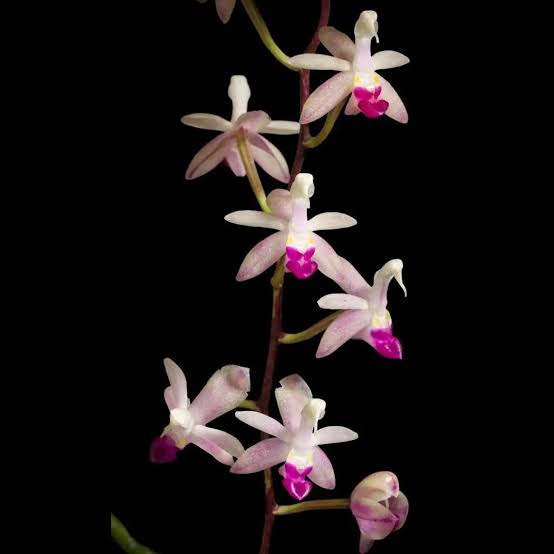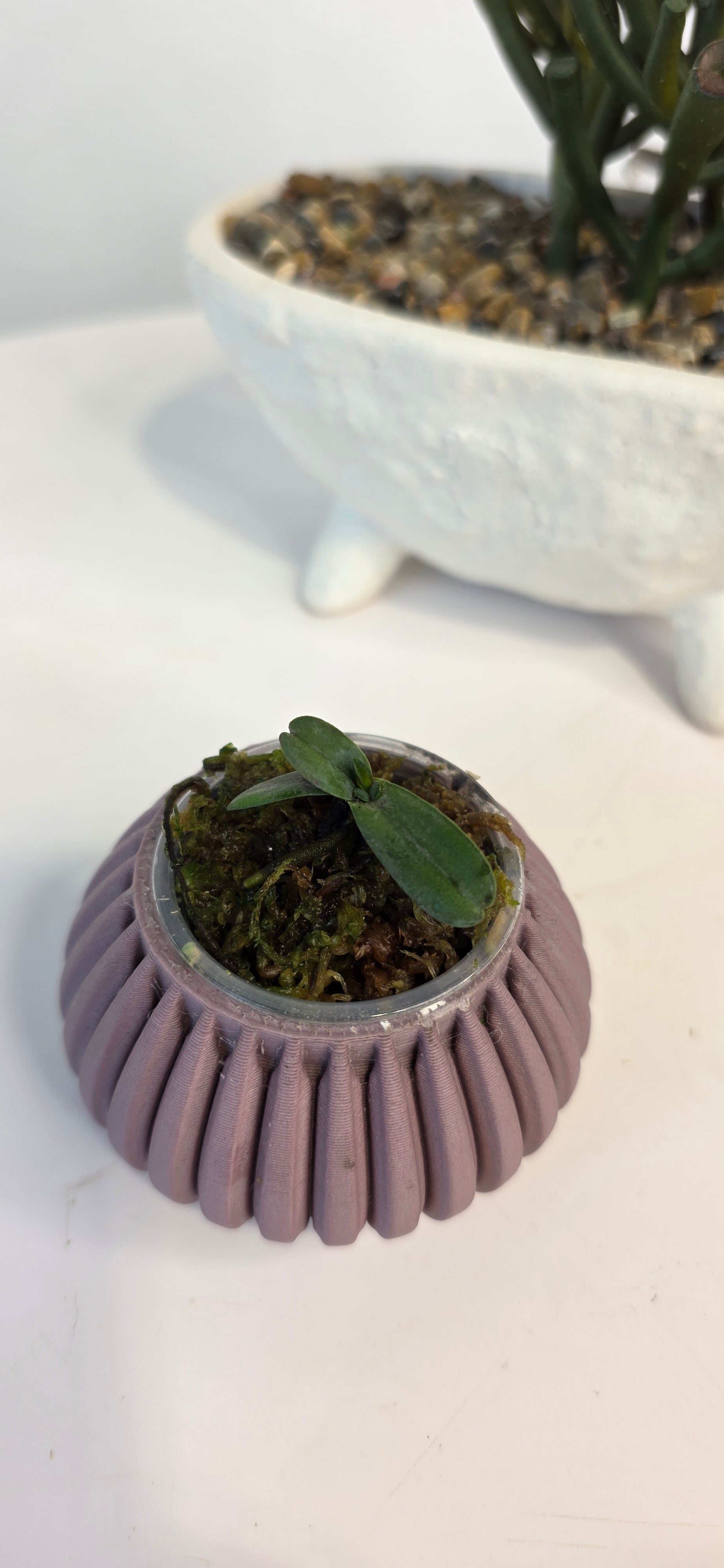



Stereochilus pachyphyllus is an epiphytic orchid native to the humid forests of Southeast Asia, particularly in regions like Myanmar, Thailand, and northeastern India. It is part of the Stereochilus genus, known for its hardy, small epiphytic orchids that cling to tree branches in humid, shaded environments.
Key Features:
-
Growth Habit:
-
Epiphytic, meaning it naturally grows on tree trunks or branches.
-
Forms compact clumps of growths from thick, fleshy stems.
-
-
Leaves:
-
Thick, succulent-like leaves (hence the name pachyphyllus, meaning “thick-leaved”).
-
Leaves are generally elongated, leathery, and retain moisture well, making the plant more drought-tolerant than many other orchids.
-
-
Flowers:
-
Small, star-shaped flowers, usually pale green, yellow, or brown with subtle markings.
-
Flowers are often fragrant, though not as showy as those of some other orchids.
-
They bloom in clusters, typically in late spring or summer.
-
-
Size:
-
Compact plant; stems are usually a few inches long. Leaves are thick but not very large, making this suitable for small displays or mounted growth.
-
Care Guide for Stereochilus pachyphyllus
1. Light:
-
Prefers bright, indirect light.
-
Can tolerate medium light but avoid direct sun, which can scorch leaves.
-
Under artificial light, place near a grow light or a bright window with filtered light.
2. Temperature:
-
Intermediate to warm conditions: 60–85°F (15–29°C).
-
Can tolerate slightly cooler nights but avoid frost.
3. Humidity:
-
Likes high humidity, ideally 60–80%.
-
Good air circulation is important to prevent fungal or bacterial problems.
4. Watering:
-
Water thoroughly during active growth, allowing the medium to dry slightly between waterings.
-
Reduce watering slightly after flowering but do not let pseudobulbs shrivel completely.
-
Because of thick leaves, it can store water, making it somewhat drought-tolerant.
5. Potting Medium / Mounting:
-
Epiphytic style: Often grown on cork, bark, or tree fern mounts.
-
Potting medium: Use coarse orchid bark, sphagnum moss, or a mix that drains quickly.
-
Ensure roots have space and air circulation; do not let them sit in soggy medium.
6. Fertilization:
-
Use a balanced orchid fertilizer (20-20-20 or similar) diluted to ¼–½ strength every 2–3 weeks during growth.
-
Reduce feeding during dormancy or after flowering.
7. Blooming Tips:
-
Provide a humid, stable environment with moderate light.
-
Slightly cooler night temperatures can encourage flowering.