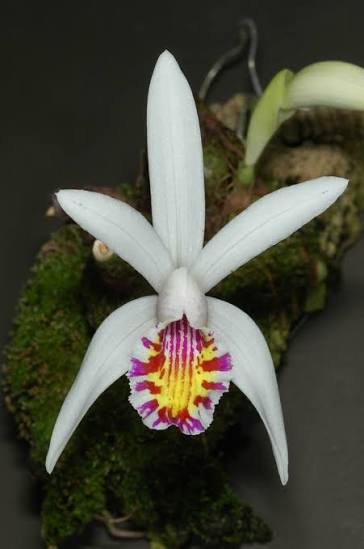


Pleione maculata is a species of orchid that belongs to the genus Pleione, often referred to as “peacock orchids” or “Himalayan orchids.” It is native to parts of the Himalayas and nearby regions, typically found in montane forests and high-altitude areas.
Key Features:
-
Growth Habit: Pleione maculata is a terrestrial or epiphytic orchid, meaning it can grow in soil or on other plants. It is a small, bulbous orchid that grows from pseudobulbs.
-
Leaves: The plant produces 2–3 lance-shaped, pleated leaves per growth season. The leaves often have a soft green color and may display some spotting or variegation depending on the individual plant.
-
Flowers: The flowers are the most striking feature. They are usually single per pseudobulb, emerging in spring. Pleione maculata flowers are showy, with a combination of white or pale pink petals marked with darker spots or streaks (hence the “maculata” or “spotted” name). The lip (labellum) is often more intensely colored, sometimes with yellow or deeper pink markings.
-
Size: The plant is relatively small, with flowers typically around 3–5 cm (1–2 inches) across.
-
Dormancy: After flowering, Pleione maculata goes through a dormancy period during which the pseudobulbs shrink and the leaves die back. This is followed by the growth of new pseudobulbs for the next season.
Care Guide: Pleione maculata
Light
-
Bright, indirect light
-
Morning sun is usually fine; avoid hot midday sun which can scorch leaves
-
During dormancy, keep in shaded light
Temperature
-
Cool to intermediate-growing
-
Active growth: 15–22°C (59–72°F)
-
Dormancy: can tolerate 5–10°C (41–50°F) as tubers rest
-
Avoid frost that can damage the tubers
Air Movement
-
Good airflow is essential, especially during active growth and flowering, to prevent fungal or bacterial infections
Watering
-
Active growth: Keep medium consistently moist, but not waterlogged
-
Dormancy: Reduce watering drastically; keep tubers barely moist to prevent shriveling
-
Avoid letting tubers sit in water
Potting & Medium
-
Use well-draining medium, such as:
-
Fine bark, sphagnum moss, perlite, or a mix
-
Shallow pots are preferred
-
-
Pleiones can also be grown in baskets or on slabs with moss
Fertilizer
-
Feed lightly with a balanced, weak orchid fertilizer during active growth
-
Apply every 1–2 weeks; stop feeding during dormancy
Blooming Tips
-
Maintain cool to intermediate temperatures and consistent moisture in spring
-
Avoid moving or disturbing the tubers once buds appear
-
Provide good light but avoid direct hot sun to encourage large, vibrant blooms