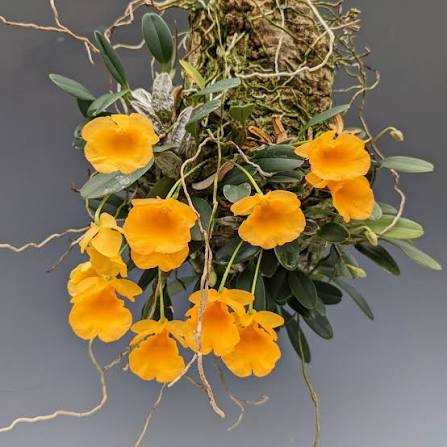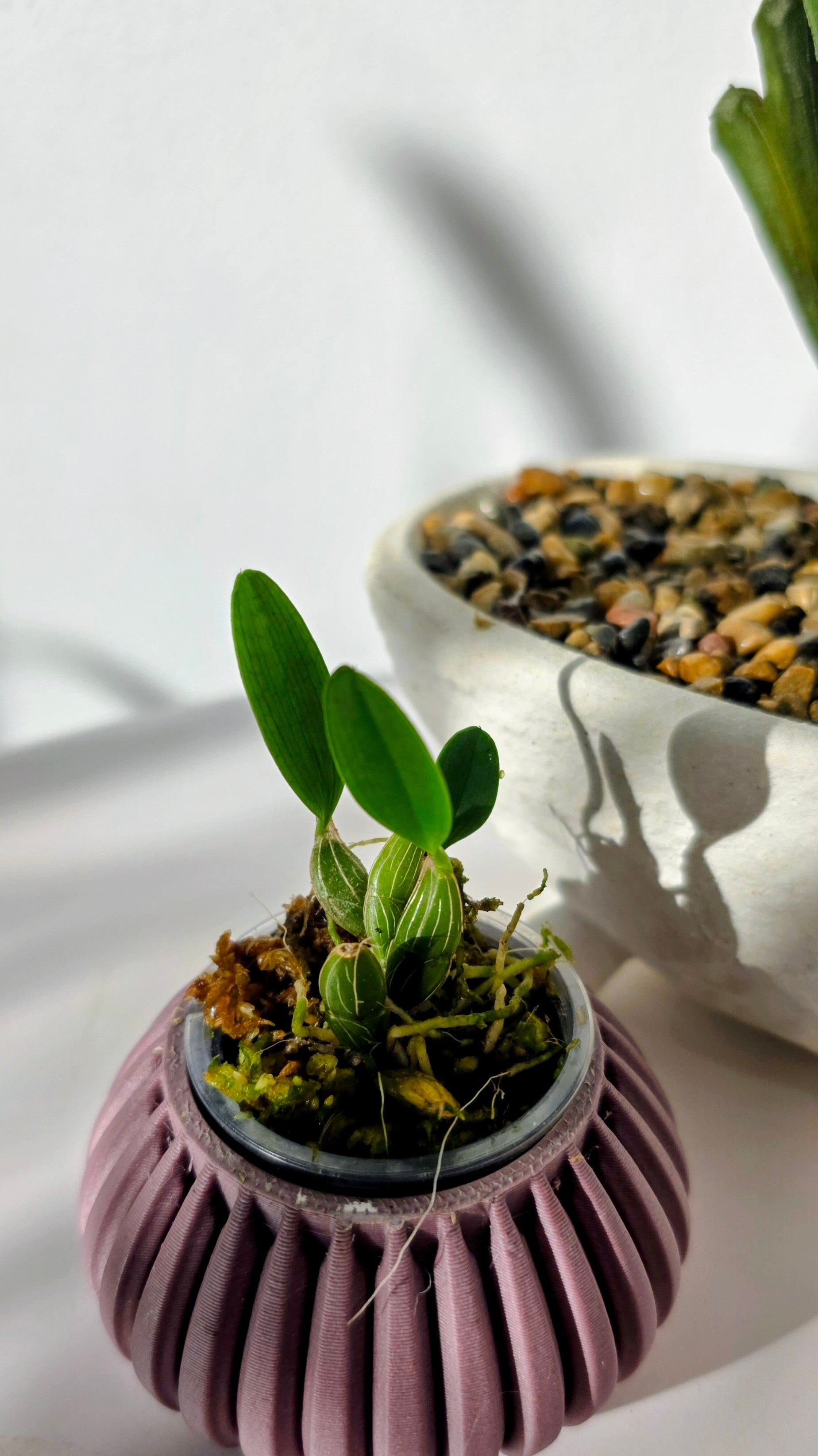



Dendrobium jenkinsii is a miniature epiphytic orchid native to the forests of Southeast Asia, including India, Thailand, and Myanmar. It is part of the Dendrobium genus and is highly valued for its compact growth and delicate flowers, making it ideal for small collections or terrariums.
Key features:
-
Growth habit: Epiphytic, compact clumping with short, slender pseudobulbs
-
Pseudobulbs: Cylindrical, slightly flattened, often with age turning woody
-
Leaves: Small, lanceolate, thin, alternating along the pseudobulbs
-
Flowers: Tiny but attractive, usually white or pale yellow with a darker lip, produced at the base of mature pseudobulbs
-
Blooming: Often in small clusters, blooming in warm, humid conditions
-
Fragrance: Mild or slightly sweet
-
Natural habitat: Grows in shaded, humid forest environments on tree branches or rocks
This orchid is excellent for small pots, baskets, or mounted displays, especially for growers who like miniature species.
Care Guide: Dendrobium jenkinsii
Light
- Bright, indirect light is ideal
- Can tolerate some morning or late afternoon sun
- Avoid strong midday sun, which can burn leaves
Temperature
-
Warm to intermediate-growing species
-
Day: 24–30°C (75–86°F)
-
Night: 16–20°C (60–68°F)
-
Can tolerate slightly cooler temperatures, but not frost
Humidity
-
Moderate to high humidity (50–80%)
-
Ideal for greenhouses, terrariums, or humidity trays
-
Ensure good air circulation to prevent fungal issues
Watering
-
Keep the growing medium slightly moist during active growth
-
Reduce watering slightly after flowering, but do not let pseudobulbs dry out completely
-
Avoid standing water in the pot or around roots
Mounting & Potting
-
Mounting: Cork, tree fern, or bark works well
-
Potting: Small pots or baskets with fine bark, sphagnum moss, or orchid mix
-
Mounted plants may need daily misting; potted plants require frequent but careful watering
Fertilizer
-
Feed lightly during active growth
-
Use a balanced orchid fertilizer at ¼–½ strength every 1–2 weeks
-
Flush with plain water occasionally to prevent salt buildup
Blooming Tips
-
Stable warmth and humidity encourage flowering
-
Avoid moving plants while buds are forming
-
Ensure some seasonal variation (slightly drier winter) to mimic natural conditions